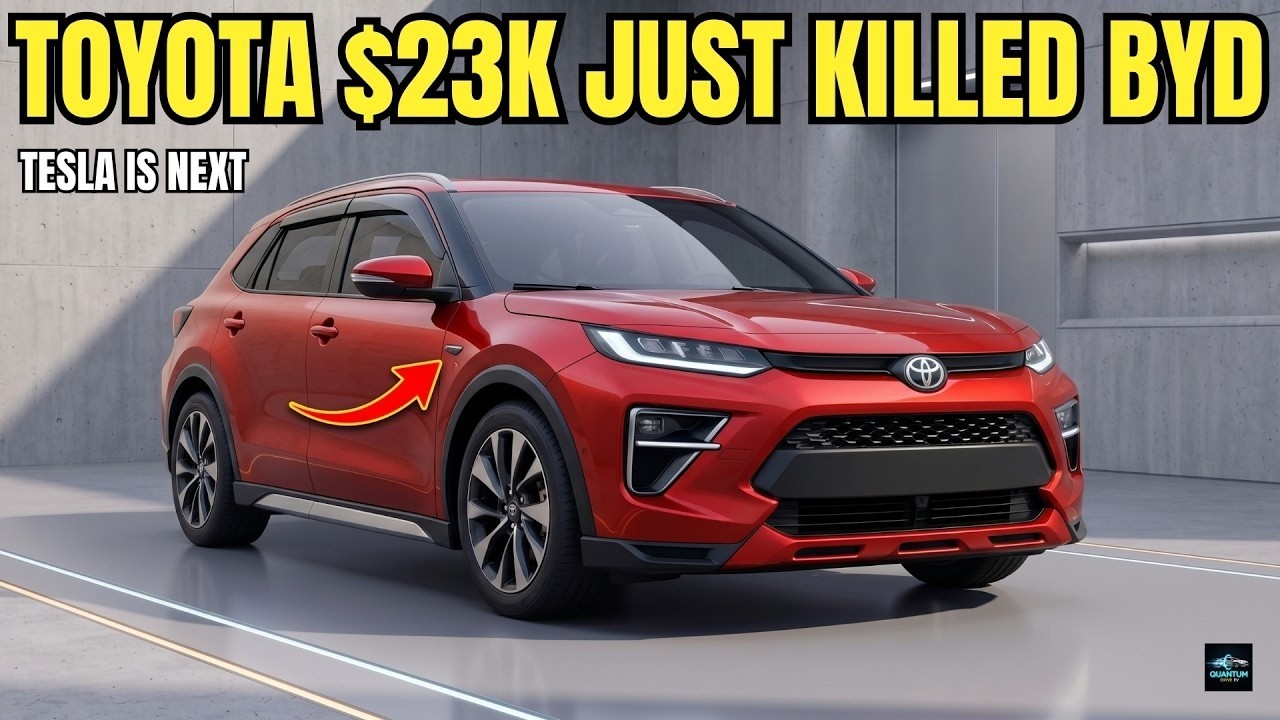
The global electric vehicle market is entering a new phase, and Toyota appears ready to make one of its boldest moves yet. After years of being criticized for moving slowly in the battery electric vehicle (BEV) segment, the Japanese auto giant is finally preparing an affordable electric SUV that could dramatically change the competition.
Reports suggest Toyota is developing a compact electric SUV with an expected starting price of around $23,000, putting it directly in competition with affordable EVs from BYD while also challenging Tesla’s future low-cost electric car strategy. If Toyota successfully delivers on pricing, reliability, battery technology, and production scale, this SUV could become one of the most important electric vehicle launches of the decade.
For buyers in the United States and global markets, this vehicle represents more than just another electric SUV. It signals Toyota’s aggressive comeback in the EV race.
Why Toyota’s Affordable Electric SUV Matters
Until recently, Toyota focused heavily on hybrid vehicles instead of fully electric cars. Models like the Prius, RAV4 Hybrid, and Corolla Hybrid became massive success stories worldwide.
However, the rapid rise of Tesla and China’s BYD forced nearly every traditional automaker to rethink its EV strategy.
Now Toyota wants to compete where demand is growing fastest:
- Affordable electric SUVs
- Practical family EVs
- Long driving range
- Low ownership costs
- Reliable battery technology
Instead of launching another expensive premium EV, Toyota appears to be targeting mainstream buyers.
Expected Price Around $23,000
Perhaps the biggest headline is pricing.
Industry reports suggest Toyota aims to introduce the new electric SUV with a base price close to $23,000 in selected markets before incentives.
If achieved, that would place it among the least expensive electric SUVs from a major global manufacturer.
Such aggressive pricing could attract:
- First-time EV buyers
- Young families
- Daily commuters
- Urban drivers
- Toyota loyalists upgrading from gasoline vehicles
Price has remained one of the largest barriers to EV adoption, making Toyota’s strategy particularly significant.
Designed to Compete with BYD
Chinese manufacturer BYD has rapidly become one of the world’s biggest EV companies.
The company has expanded aggressively across Asia, Europe, South America, Australia, and several emerging markets.
BYD’s biggest strengths include:
- Competitive pricing
- In-house battery production
- Fast manufacturing
- Strong supply chain
- Wide model lineup
Toyota’s upcoming electric SUV appears designed to directly challenge these advantages.
Rather than competing only on luxury or performance, Toyota may focus on dependability, resale value, dealer support, and lower maintenance.
Tesla Finally Faces a New Budget Rival
Tesla continues dominating many EV markets thanks to:
- Model Y
- Model 3
- Supercharger network
- Software updates
- Strong brand recognition
However, Tesla has long promised a more affordable electric vehicle.
Toyota’s new SUV could reach buyers before Tesla introduces its next-generation low-cost EV.
If Toyota delivers a compelling combination of price and quality, many budget-conscious buyers could consider it instead of waiting for Tesla.
Expected Design
Although Toyota has not officially revealed every detail, early reports indicate the SUV may feature a modern crossover design.
Expected styling includes:
- LED headlights
- Closed EV grille
- Sharp body lines
- Aerodynamic profile
- Roof spoiler
- Large touchscreen
- Digital driver display
Toyota is expected to keep the design practical while adding enough modern styling to attract younger buyers.
Interior Focused on Everyday Families
Toyota has always excelled at creating practical interiors.
The affordable electric SUV is expected to include:
- Spacious cabin
- Flat floor layout
- Comfortable rear seating
- Multiple USB-C ports
- Wireless smartphone connectivity
- Digital instrument cluster
- Large infotainment screen
- Advanced voice controls
Rather than emphasizing flashy luxury, Toyota will likely prioritize comfort and usability.
Battery Technology Could Be a Major Advantage
Toyota has invested billions of dollars into battery development over the past decade.
The company continues researching:
- Lithium-ion batteries
- LFP batteries
- Solid-state batteries
- Improved thermal management
- Faster charging technology
For this affordable SUV, Toyota may choose LFP batteries to reduce manufacturing costs while maintaining long-term durability.
These batteries generally offer:
- Longer lifespan
- Lower replacement costs
- Improved safety
- Better value
Expected Driving Range
Toyota has not confirmed official EPA estimates.
However, industry expectations suggest:
- Around 250–300 miles per charge
- Efficient regenerative braking
- Fast DC charging
- Home charging compatibility
This would comfortably meet the needs of most American drivers.
According to transportation studies, the average U.S. driver travels well under 50 miles per day, making a 250-mile EV more than sufficient for daily commuting.
Fast Charging Support
Charging speed is becoming just as important as driving range.
Toyota is expected to offer:
- DC fast charging
- Level 2 home charging
- Public charging compatibility
- Smartphone charging management
Faster charging reduces range anxiety and makes road trips more practical.
Toyota’s Biggest Strength: Reliability
While Tesla leads software innovation and BYD dominates manufacturing scale, Toyota still owns one of the strongest reputations in the automotive industry.
Millions of customers trust Toyota because of:
- Long vehicle lifespan
- Low repair costs
- High resale value
- Strong dealership network
- Excellent reliability ratings
That trust could convince many traditional buyers to choose Toyota for their first electric vehicle.
Safety Expected to Be a Priority
Toyota rarely launches new vehicles without advanced safety technology.
The SUV is expected to include Toyota Safety Sense features such as:
- Automatic emergency braking
- Lane departure warning
- Adaptive cruise control
- Blind spot monitoring
- Rear cross-traffic alert
- Traffic sign recognition
Safety remains one of Toyota’s strongest selling points.
Production Strategy
Toyota plans significant investments in EV manufacturing across several global regions.
Localized production could help reduce:
- Shipping costs
- Import duties
- Supply chain disruptions
- Delivery times
Lower production costs make competitive pricing much easier to achieve.
Why Toyota Waited So Long
Many industry experts questioned Toyota’s cautious approach to fully electric vehicles.
Instead of rushing into battery EVs, Toyota concentrated on:
- Hybrid technology
- Hydrogen fuel-cell research
- Battery development
- Manufacturing efficiency
Although this strategy attracted criticism, Toyota believes it now has the technology and production capacity needed for large-scale EV expansion.
Competition in the Affordable EV Market
Toyota will face serious rivals, including:
| Brand | Key Competitor |
|---|---|
| Tesla | Future affordable EV |
| BYD | Atto series |
| Hyundai | Kona Electric |
| Kia | EV3 |
| Chevrolet | Equinox EV |
| Volkswagen | ID lineup |
Competition will ultimately benefit consumers through lower prices and better technology.
Potential Launch Markets
The new electric SUV could debut in multiple regions, including:
- China
- Japan
- Southeast Asia
- Europe
- North America
- Australia
Market-specific pricing and specifications may vary depending on local regulations and incentives.
Environmental Impact
Affordable EVs can significantly reduce transportation emissions.
Compared with traditional gasoline SUVs, electric vehicles generally offer:
- Lower tailpipe emissions
- Reduced fuel costs
- Quieter driving
- Lower maintenance requirements
As renewable electricity expands, EVs become even cleaner over their lifetime.
Could It Become Toyota’s Next Bestseller?
Toyota already sells millions of SUVs every year.
If the company combines:
- Affordable pricing
- Strong driving range
- Proven reliability
- Competitive technology
- Wide dealer availability
the upcoming electric SUV could become one of Toyota’s highest-volume EVs globally.
Demand for affordable electric crossovers continues to grow, especially among families transitioning from gasoline vehicles.
Final Verdict
Toyota’s rumored $23,000 electric SUV could mark a turning point in the global EV market. Rather than chasing luxury buyers, Toyota appears focused on delivering an affordable, dependable, and practical electric SUV that appeals to everyday drivers.
While Tesla continues pushing software innovation and BYD expands rapidly with cost-efficient manufacturing, Toyota’s biggest strengths remain its engineering expertise, trusted reliability, and massive global dealer network.
If Toyota delivers the expected pricing, competitive driving range, modern technology, and the long-term durability the brand is known for, this new electric SUV could become one of the most influential electric vehicle launches in recent years—reshaping competition in the affordable EV segment and giving buyers another compelling alternative to both BYD and Tesla