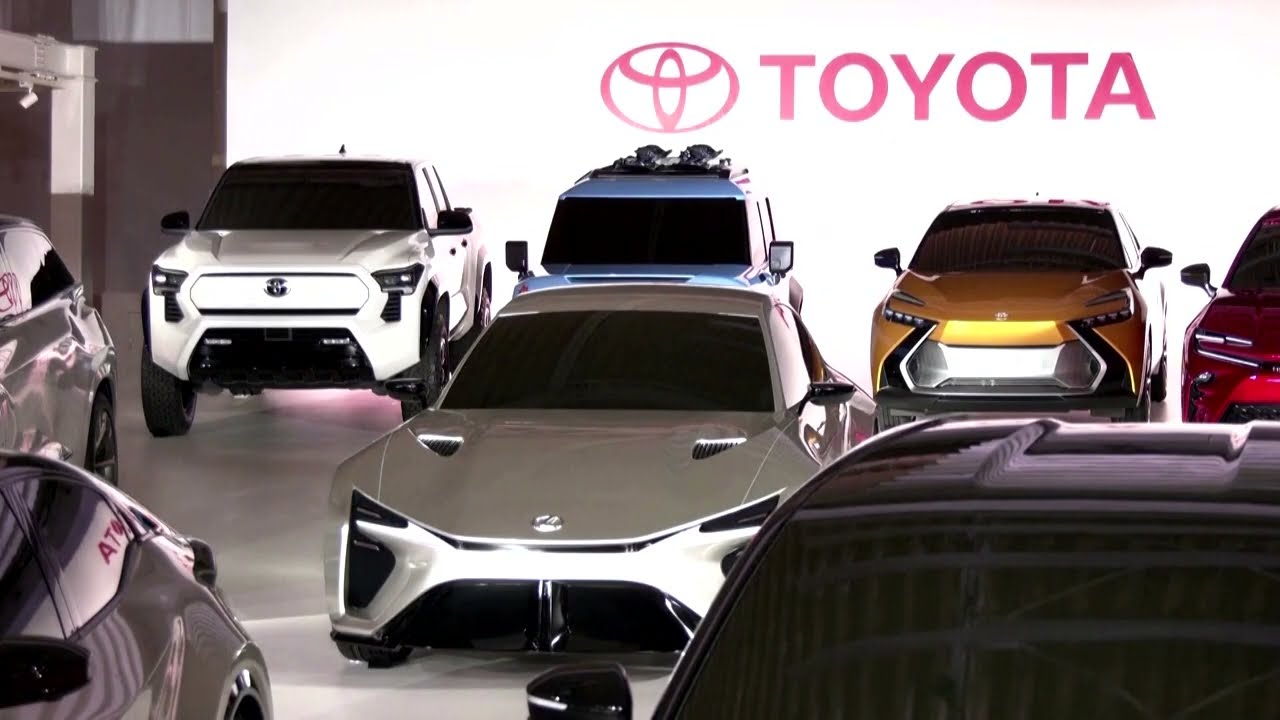
Toyota has officially doubled down on its electric vehicle (EV) ambitions by reaffirming its goal to sell 3.5 million battery electric vehicles (BEVs) annually by the end of the decade. The announcement marks one of the most significant strategic shifts in Toyota’s history, especially considering the Japanese automaker was once criticized for being slow to embrace fully electric vehicles.
For years, Toyota focused heavily on hybrid technology while rivals like Tesla and China’s BYD rapidly expanded their all-electric lineups. But the global EV market is evolving faster than ever, and Toyota is now preparing one of the industry’s biggest product offensives with new EV platforms, next-generation batteries, advanced software, and multiple electric SUVs, sedans, and pickup trucks.
For American buyers, investors, and auto enthusiasts, Toyota’s new target signals a major transformation that could reshape the global electric vehicle market over the next five years.
Toyota’s New Electric Vehicle Vision
Toyota aims to sell 3.5 million battery-electric vehicles every year by 2030, representing roughly one-third of its expected global vehicle sales.
The company plans to achieve this through:
- A completely new generation of EV platforms
- More affordable battery technology
- High-performance solid-state batteries
- Faster manufacturing methods
- Improved software and autonomous driving capabilities
- Expansion of EV production in North America, Europe, and Asia
Toyota believes the transition will allow it to compete more effectively against EV leaders including Tesla, BYD, Hyundai, Kia, Volkswagen, and General Motors.
Why Toyota Is Accelerating EV Development
Toyota dominated the hybrid market for more than two decades with vehicles like the Prius, Camry Hybrid, Corolla Hybrid, and RAV4 Hybrid.
However, consumer demand is rapidly shifting toward fully electric vehicles.
Several major factors are pushing Toyota to increase EV production:
Government Regulations
Countries across Europe, North America, and parts of Asia continue introducing stricter emissions rules.
Many governments have announced plans to gradually phase out gasoline-powered vehicles over the next decade.
Rising Competition
Tesla continues leading premium EV sales in many regions.
Chinese manufacturer BYD has become the world’s largest producer of new-energy vehicles.
Legacy automakers including Ford, GM, Hyundai, Kia, Honda, BMW, Mercedes-Benz, and Volkswagen are all investing billions into electric vehicles.
Toyota cannot afford to remain behind.
Consumer Demand
EV buyers increasingly expect:
- Longer driving range
- Faster charging
- Lower operating costs
- Better technology
- Over-the-air software updates
Toyota wants future EVs to deliver all of these features while maintaining the brand’s reputation for reliability.
Toyota’s Next-Generation EV Platform
One of Toyota’s biggest investments is its dedicated next-generation EV architecture.
Unlike converted gasoline vehicles, this platform is designed exclusively for battery-electric models.
Benefits include:
- Better battery packaging
- Larger interior space
- Lower center of gravity
- Improved safety
- Higher efficiency
- Reduced manufacturing costs
Toyota says this platform will help future EVs become lighter, more aerodynamic, and more enjoyable to drive.
Solid-State Batteries Could Change Everything
Perhaps Toyota’s most exciting development involves solid-state battery technology.
Unlike today’s lithium-ion batteries, solid-state batteries promise:
- Much longer driving range
- Faster charging
- Improved safety
- Longer battery life
- Better cold-weather performance
- Lower fire risk
Industry experts believe Toyota remains one of the leaders in solid-state battery research.
If commercial production succeeds, Toyota could gain a significant advantage over many competitors.
Faster Manufacturing Means Lower Prices
Toyota is also reinventing how vehicles are built.
The company plans to introduce advanced manufacturing methods that reduce:
- Factory complexity
- Assembly time
- Production costs
- Vehicle weight
Lower production costs could eventually make Toyota EVs more affordable for mainstream buyers.
New Electric SUVs Coming Soon
SUVs remain America’s favorite vehicle category.
Toyota plans to expand its electric SUV lineup with models covering multiple price ranges.
Expected future offerings include:
- Compact crossover EV
- Mid-size family SUV
- Three-row electric SUV
- Luxury Lexus electric SUVs
- Electric pickup truck
- Rugged off-road EV
These vehicles will complement existing electrified products such as the bZ series.
North America Plays a Huge Role
The United States remains one of Toyota’s largest markets.
To support growing EV demand, Toyota has invested heavily in North American manufacturing.
Major investments include:
- Battery production facilities
- EV assembly plants
- Supply chain expansion
- Local battery sourcing
- Semiconductor partnerships
Producing vehicles closer to customers helps reduce costs while qualifying for certain government incentives.
Can Toyota Reach 3.5 Million EV Sales?
The target is ambitious.
For comparison, few automakers currently sell millions of battery-electric vehicles annually.
Toyota faces several challenges.
Battery Supply
Global battery demand continues growing rapidly.
Securing enough lithium, nickel, graphite, and rare-earth materials remains difficult.
Charging Infrastructure
Many consumers still worry about charging availability.
Expansion of public fast-charging networks will be essential for wider EV adoption.
Price Competition
Chinese manufacturers continue launching affordable electric vehicles.
Toyota must balance profitability with competitive pricing.
Software Competition
Modern EV buyers expect advanced software experiences.
Tesla has set high standards for:
- Over-the-air updates
- Connected services
- Driver assistance
- Smartphone integration
Toyota continues investing heavily in software development to close this gap.
Toyota Still Believes in Multiple Technologies
Unlike some rivals, Toyota has not abandoned hybrid technology.
The company continues supporting a multi-path strategy including:
- Hybrid vehicles
- Plug-in hybrids
- Battery-electric vehicles
- Hydrogen fuel-cell vehicles
Toyota believes different markets require different solutions based on infrastructure and consumer needs.
This diversified approach may reduce business risk while EV adoption continues evolving worldwide.
Impact on American Buyers
For U.S. consumers, Toyota’s EV expansion could bring several benefits.
More Choices
Customers can expect a wider variety of electric sedans, SUVs, crossovers, and trucks.
Better Technology
Future Toyota EVs are expected to feature:
- Improved infotainment
- Faster charging
- Longer driving ranges
- Enhanced safety systems
- Smarter driver-assistance features
Competitive Pricing
As production scales up, prices could become more competitive compared with today’s electric vehicles.
Competition Will Benefit Everyone
Toyota’s aggressive EV strategy intensifies competition across the automotive industry.
Manufacturers will likely compete through:
- Lower prices
- Better battery technology
- Longer warranties
- Faster charging
- Improved software
- Greater reliability
Ultimately, consumers stand to gain the most.
Environmental Impact
If Toyota reaches annual sales of 3.5 million battery-electric vehicles, the environmental impact could be substantial.
Potential benefits include:
- Reduced greenhouse gas emissions
- Lower fuel consumption
- Less urban air pollution
- Increased renewable energy integration
- Faster transition away from fossil fuels
However, experts also emphasize the importance of sustainable battery recycling and responsible mineral sourcing.
Looking Ahead
The next few years will be critical for Toyota.
The company must successfully launch multiple competitive electric models while scaling battery production and improving charging technology.
Strong execution will determine whether Toyota can challenge Tesla, BYD, and other EV leaders.
If the company achieves its 3.5 million annual EV sales goal, it would represent one of the largest transformations ever undertaken by a traditional automaker.
Final Thoughts
Toyota’s commitment to selling 3.5 million electric vehicles annually by 2030 represents far more than a sales target—it reflects a fundamental shift in the company’s long-term strategy. By combining its decades of manufacturing expertise with next-generation batteries, advanced EV platforms, and expanded global production, Toyota aims to become a major force in the rapidly growing electric vehicle market. While significant challenges remain, including fierce competition, battery supply constraints, and evolving consumer expectations, Toyota’s scale and engineering capabilities give it a strong foundation. For U.S. buyers, the coming years could bring more affordable, technologically advanced, and reliable electric vehicles as Toyota accelerates its EV transformation.